Introduction
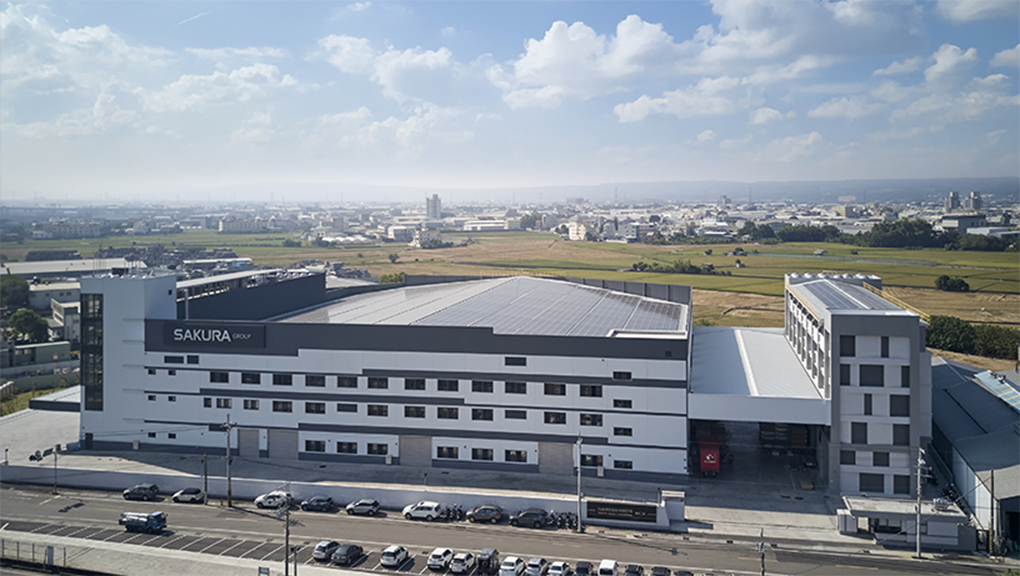
In November 2024, SAKURA Group officially inaugurated its next-generation manufacturing base in Wuri, Taichung. The facility does more than expand capacity—it anchors the companys push into AI KITCHEN and whole-home integration, marking a clear shift from "making products" to "orchestrating living spaces."
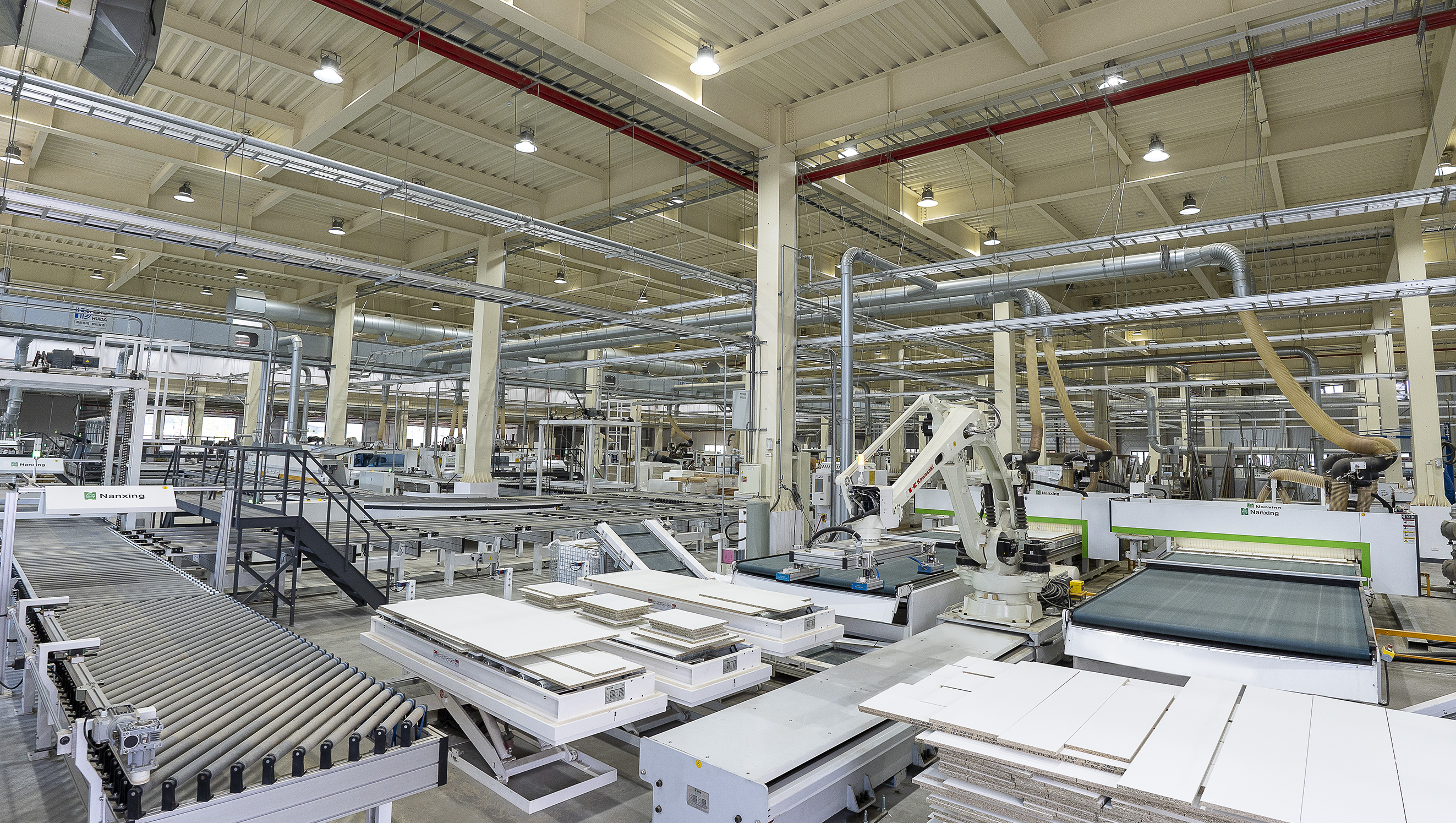
The production line at the heart of this transformation was built around a fully integrated panel processing cell: automated material handling, CNC nesting, and automated edge banding, all governed by a central MES that tracks every panel from raw board to finished component.
"Wuri is not just an extension of our production footprint," said General Manager Li Huixun. "It is the bridge to our future. We need manufacturing precision and speed to support the upgrade of the home-living industry, and to bring the AI KITCHEN concept into real homes faster."
The Layout: From Raw Panel to Finished Part in One Flow
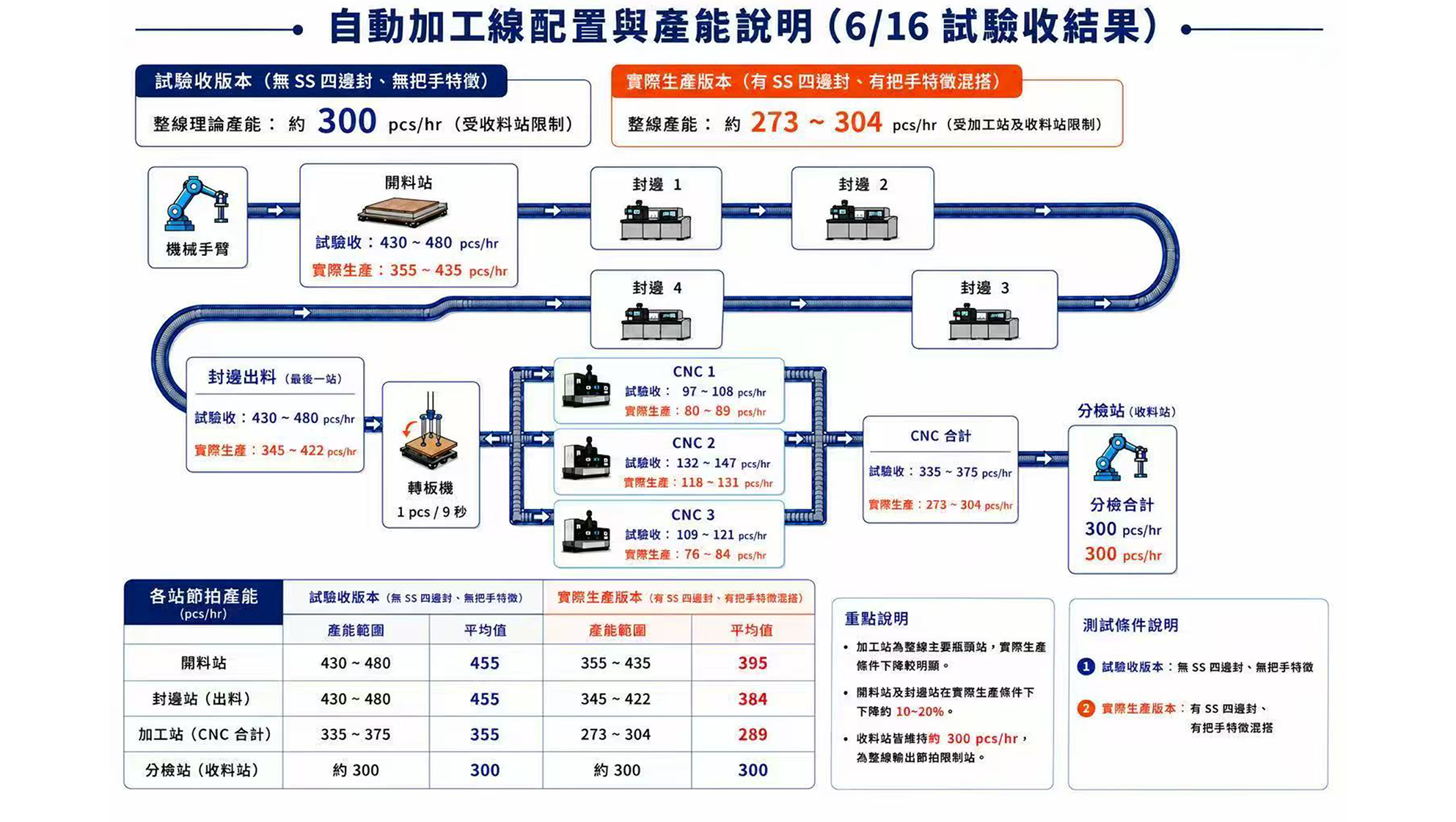
The production cell follows a strict one-piece flow logic. Standard-size raw panels enter from the left side of the line, loaded by forklift onto a lifting platform. The first station is an automatic labeling machine that applies a barcode label to each panel, establishing its digital identity before any processing begins.
Once labeled, the lifting platform’s crossbeam moves to the trailing edge of the panel and pushes the raw board forward to the infeed connection of the CNC machining center. A movable crossbeam with vacuum suction cups then grips the panel and transfers it to the cutting station for nested cutting.
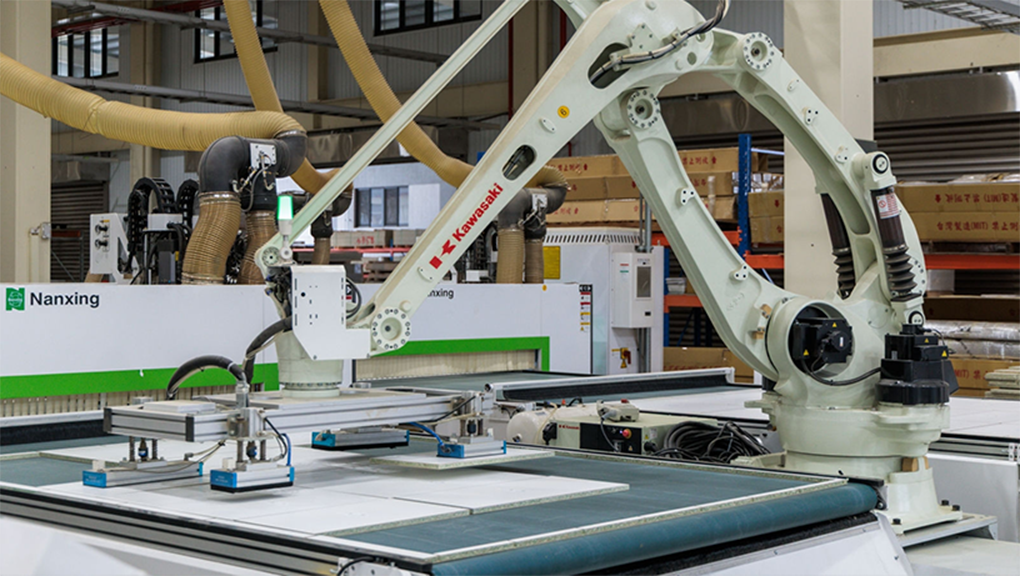
Based on order data, the CNC nests and cuts panels into components of varying dimensions. After cutting, a robotic arm sorts the parts: panels requiring edge banding are transferred to the edge banding conveyor; panels that do not require banding are routed via a separate conveyor directly to the drilling center.
Panels entering the edge banding zone move through a U-shaped line layout. This configuration brings the return path parallel to the infeed, minimizing floor space while keeping operator access and maintenance aisles open. Four edge banders operate in series, applying edge tape to all four sides of each panel in a single pass—no flipping, no re-handling, no intermediate queues.
In the drilling zone, each panel is scanned by its QR code. The MES routes it to the appropriate drilling workstation based on production requirements—different hole patterns, hardware placements, or assembly configurations are handled by dedicated stations. This eliminates manual sorting and ensures every panel receives the correct machining program.
There is no batching, no intermediate buffering, no manual carting between stations. The entire line is governed by a central control system that tracks every panel by barcode from entry to exit.
This layout directly supports SAKURA’s strategic pivot from single-product supplier to total-space solution provider. The Wuri plant now handles integrated kitchens, home furniture, and multi-category lines simultaneously—backed by highly flexible modular design and intelligent scheduling that lets the factory respond rapidly to both project-based and retail demand.
The Control Layer: Why Integration Beats Isolation
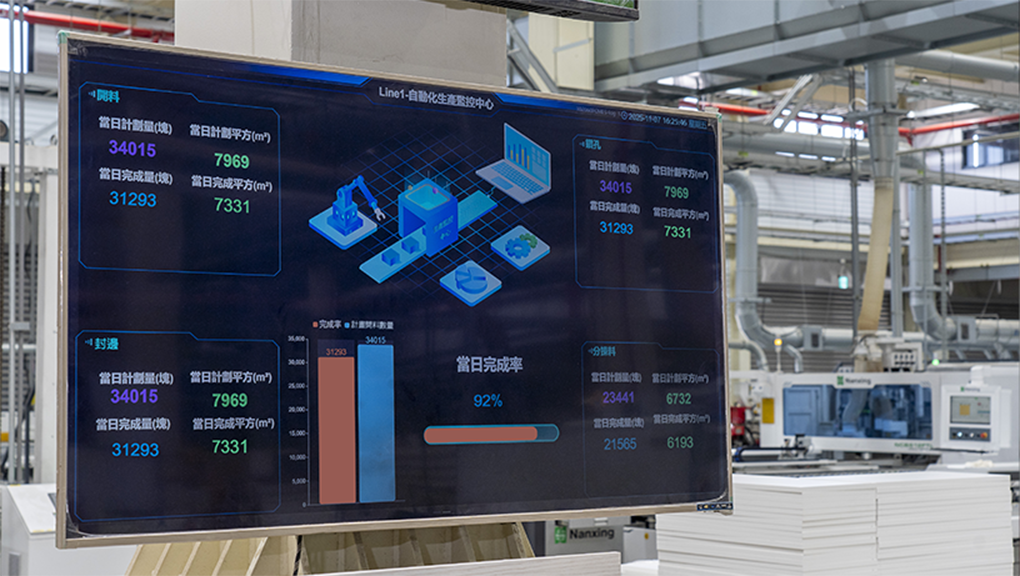
What separates this line from a collection of standalone machines is the control architecture. A manufacturing execution system (MES) sits at the center, pulling data from each station every few seconds.
• Real-time OEE — availability, performance, and quality metrics update live on overhead dashboards.
• Predictive alerts — if edge banding glue temperature drifts, the system flags it before a single defective panel exits the station.
• Traceability — every finished part carries a QR-code identity linking back to the raw panel batch, the CNC program version, and the edge banding parameter set.
This is the infrastructure that makes SAKURAs quality promise real. As Li Huixun put it: "Quality is not merely the result of manufacturing. It is the starting point of brand trust."
Quality 4.0: When Data Replace Guesswork
Wuri runs full Industry 4.0 production lines and automated inspection equipment, shifting quality control from human experience to data-driven decisions. AI vision recognition and high-precision measurement automatically correct dimensions, thickness, and positioning in real time—ensuring every panel meets spec.
The plant also houses salt-spray testing, constant-temperature/humidity chambers, and hardware life-cycle test equipment to validate durability and stability. "Made by SAKURA" is being positioned as a quality benchmark for Taiwans home-living industry.
Why This Matters for the Industry
For panel furniture manufacturers, the pressure is familiar: shorter lead times, smaller batch sizes, higher quality expectations, and labor costs that keep rising. The traditional answer—buying more standalone machines and hiring more operators—has hit a ceiling.
SAKURAs Wuri plant shows a different path. Instead of optimizing machines in isolation, the optimization target becomes the entire material flow. The result is not incremental improvement; it is a step change in how quickly and reliably a factory can convert raw panels into finished product.
"We did not just buy machines," the plant manager noted. "We bought a rhythm."
References
[1] SAKURA Group. “櫻花集團烏日新廠正式啟用,推動AI KITCHEN與全屋整合新紀元” [SAKURA Group Wuri New Plant Officially Opens, Driving a New Era of AI KITCHEN and Whole-Home Integration]. SAKURA Official News, November 2024. Available at: https://www.sakura.com.tw/News/Content/197